Our Musical Director unpacks Elgar’s life and legacy
Steven Kings has been with Monmouth Choral Society since 2014, having previously spent 14 years as Assistant Director of the BBC National Chorus of Wales. As a Worcester native, he feels especially connected to Edward Elgar. Ahead of our Autumn performance of The Dream of Gerontius, he shared his insights on the man, the music, and the restless soul with enthusiasm not only for music, but everything from chemistry to football...
 Can you tell us a little bit about what this piece means to you personally? Can you tell us a little bit about what this piece means to you personally?
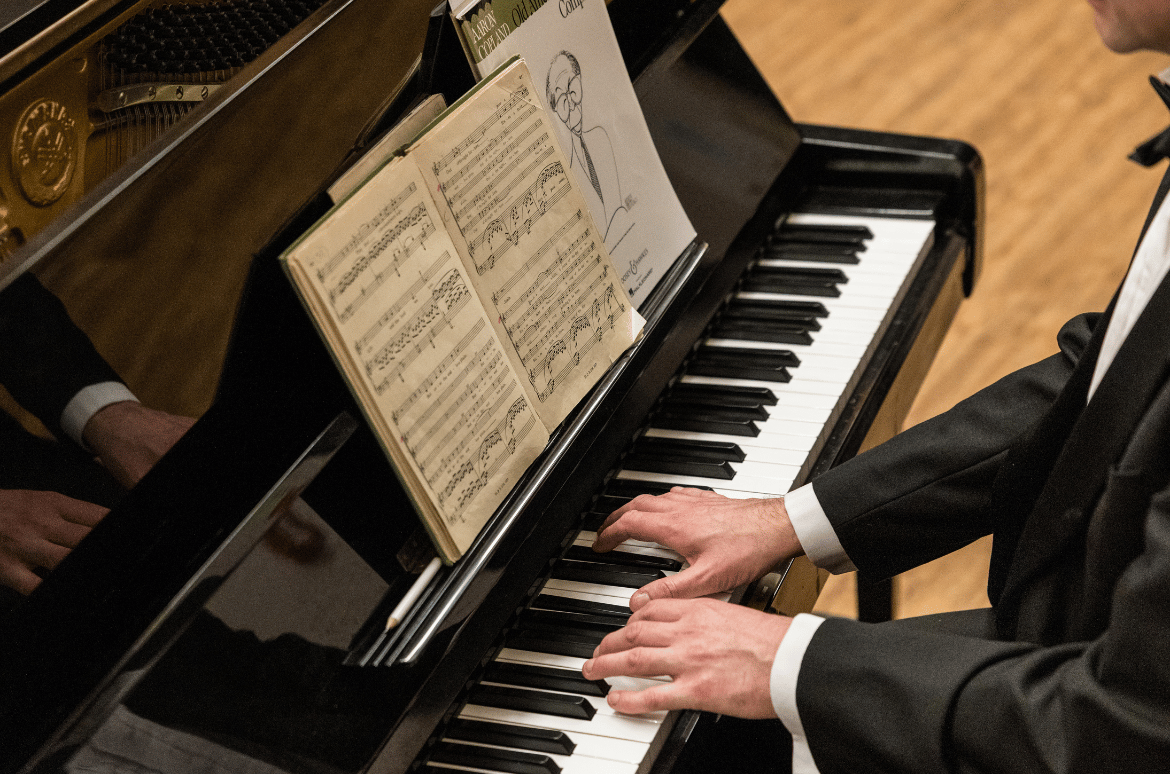
My relationship with it goes back a long way. I grew up in Worcester and sang Gerontius as a teenager and at university. Growing up there you can't escape Elgar. The landscape that inspired him — the Malvern Hills and southern Worcestershire marshes — were all part of my upbringing too. I've sung it, accompanied rehearsals as a pianist and now conducted it. Over the decades, I always find myself going deeper into it. The emotional depth is awe-inspiring and whether or not one is Catholic, the questions about our ultimate destiny are universal. It means a lot to me.
Talk us through some of the challenges that you encounter as the director of Gerontius.
The disparate performing groups are definitely a challenge. It's great having Chepstow Choral Society and a semi-chorus from Bristol, though they're rehearsed separately. The professional soloists and orchestra have very limited rehearsal time — just three hours on Saturday afternoon.
One of the biggest challenges with Elgar is that the tempo never stays in one place for long! It's seething, restless, changeable, responding very closely to the text and emotions. As a conductor, you're trying to convey those tempo changes clearly while keeping everything cohesive. Elgar's score is extremely detailed — he leaves nothing to chance. My main job is being faithful to what he was trying to convey.
Do you feel like Elgar's sitting on your shoulder telling you exactly how he wants things to be done?
Yes, but I don't find that a malevolent thing. It's a sort of spirit, a feel to the music. It's got a charisma to
it. It's not alien to me because I grew up with it, but I've been fascinated recently to see performances of Elgar by, for example, Japanese conductors, who obviously weren't brought up with it in the same way and yet respond, just as I do, to the power of the music. They bring out performances that are full of passion and energy. They really understand the music. So I don't think it's a specifically English thing in that sense.
Elgar was a Catholic in Victorian and Edwardian England, from relatively humble beginnings, and felt like an outsider. He was inclined to overreact if slighted or excluded, which is understandable. He had to work hard to make his message acceptable to the predominantly Anglican culture of English choral music, particularly at the Three Choirs Festival.
The Gerontius manuscript is known for its expressive detail. What do you find particularly interesting about his markings? Or what do you find revealing about them?
The music's restlessness and expressive detail reflect Elgar's nervous, anxious personality. Film footage shows him walking in an agitated way - the Edwardian gentleman image was an affectation. His attention to detail reveals someone interested in many things: amateur chemistry; he liked conducting experiments in the garden shed, basically. Occasionally there were explosions and the neighbours didn't like it.
He enjoyed cycling, people may know that, cycled all over the local area, and there is a statue of him with his bicycle in Hereford, outside the cathedral. He played billiards; he tried various trades to make ends meet and didn't take himself too seriously. He drew cartoons, often caricaturing himself on his bicycle.
He liked billiards, and when he was setting up home in a house of his called The Firs, which was one of the houses that he and his wife lived in, he ordered and had made a billiard table to have in the house. And, I discovered recently, he enjoyed watching football and supported Wolverhampton Wanderers.
So, what can you share about Elgar's style in Gerontius? What parts of it stand out as particularly powerful for you?
It's helpful to think of Gerontius as a kind of Wagnerian opera. Elgar went to Bayreuth and by 1900 had absorbed and integrated that Germanic influence thoroughly. Like Wagner, he uses leitmotifs — themes representing prayer, sleep, judgement, and characters like demons and angels. The harmony features chromaticism, which slithers around creating an unsettled feeling, very Wagnerian in nature. There are great soaring melodies that could work on stage. The dramatic narrative is striking: Gerontius on his deathbed, then his soul waking refreshed, meeting an angel, encountering demons and angels praising God, meeting God himself, and being taken to purgatory. Elgar puts real dramatic sensitivity and sometimes explosiveness into these events — it's like watching an opera, but unstaged.
For me, the emotional heart of the work is when the soul meets God. Newman's poem refers to this moment but doesn't describe it. Initially, Elgar wanted it private — a moment between the soul and God where we only see the reaction, not the encounter itself. His advisor Jaeger realised this was a dramatic mistake and, after much nagging, Elgar created an absolutely stunning instrumental interlude using the judgement theme. It builds to one shattering chord where he instructs the whole orchestra exerts its "fullest force" for one brief second — like a blinding flash of seeing God. So I’m excited — but I'm also aware of the responsibility of getting that moment right! Then of course anyone would enjoy the Demons chorus. It's thrilling. And "Praise to the Holiest" is so powerful — it accelerates like a plane taking off, creating an amazing feeling of the soul being propelled toward God. It's quite unique.
So, to finish off, can you give me three things that you are particularly excited about for this performance?
First, the music itself — Elgar at his absolute peak. Second, collaborating with Chepstow Choral Society, the Regency Sinfonia and our three fabulous soloists. Finally, Monmouth Choral Society have thrown hemselves — as they always do — heart and soul into this piece. I'm really looking forward to November 22nd — Saint Cecilia's Day, aptly enough — the patron saint of music — when we’ll be able to perform, all of us together.
|

 Christopher Northam reviews our summer 2025 concert: Songs of the Spirit...
.png) A leading Welsh composer has added her voice to the growing outcry over pollution in the River Wye.
A leading Welsh composer has added her voice to the growing outcry over pollution in the River Wye..jpg) Born in the crucible of slavery — part African musical inheritance, part Christian hymn, wholly something new — the spiritual carried within it a melodic and emotional vocabulary that Western classical and choral music had not encountered before. Its influence on those traditions would prove to be both profound and enduring.
Born in the crucible of slavery — part African musical inheritance, part Christian hymn, wholly something new — the spiritual carried within it a melodic and emotional vocabulary that Western classical and choral music had not encountered before. Its influence on those traditions would prove to be both profound and enduring..jpg) One figure who did much to bridge these worlds was Harry T. Burleigh, a baritone and composer who studied at the National Conservatory of Music in New York and befriended the Czech composer Antonín Dvorák in the 1890s. Burleigh introduced Dvo?ák to the melodies and structures of African American folk and spiritual music, and the results were transformative. Dvo?ák's New World Symphony — one of the most celebrated works in the classical canon — bears clear spiritual inflections in its famous largo movement, with its modal harmonies, pentatonic contours, and aching sense of longing. Dvo?ák famously declared that African American music should form the foundation of a distinctly American classical tradition; a vision that proved prescient even if it took decades to materialise fully.
One figure who did much to bridge these worlds was Harry T. Burleigh, a baritone and composer who studied at the National Conservatory of Music in New York and befriended the Czech composer Antonín Dvorák in the 1890s. Burleigh introduced Dvo?ák to the melodies and structures of African American folk and spiritual music, and the results were transformative. Dvo?ák's New World Symphony — one of the most celebrated works in the classical canon — bears clear spiritual inflections in its famous largo movement, with its modal harmonies, pentatonic contours, and aching sense of longing. Dvo?ák famously declared that African American music should form the foundation of a distinctly American classical tradition; a vision that proved prescient even if it took decades to materialise fully..jpg) The Fisk Jubilee Singers, formed in 1871 by formerly enslaved people and their descendants at Fisk University in Nashville, were perhaps the single most important ambassadors of the spiritual to mainstream and international audiences. Their tours of the United States and Europe not only raised funds for the university but introduced European listeners — including royalty and leading musicians — to a repertoire of startling beauty and sophistication. They demonstrated that these songs could stand on concert stages without apology or condescension, and their approach of presenting spirituals with formal choral arrangement became a model for generations of Black choral directors and composers.
The Fisk Jubilee Singers, formed in 1871 by formerly enslaved people and their descendants at Fisk University in Nashville, were perhaps the single most important ambassadors of the spiritual to mainstream and international audiences. Their tours of the United States and Europe not only raised funds for the university but introduced European listeners — including royalty and leading musicians — to a repertoire of startling beauty and sophistication. They demonstrated that these songs could stand on concert stages without apology or condescension, and their approach of presenting spirituals with formal choral arrangement became a model for generations of Black choral directors and composers. Choirside chats is a new series of interviews where we chat to someone from our community about what music, choral singing and Monmouth Choral Society means to them.
  At the start of Hereford Cathedral's carol service, we process to the West End, and whilst we're doing that, the organist always plays a movement from Bach's Christmas Oratorio. Hearing that, I always think, ‘well, this is it. This is where Christmas starts’. That's around the 22nd of December.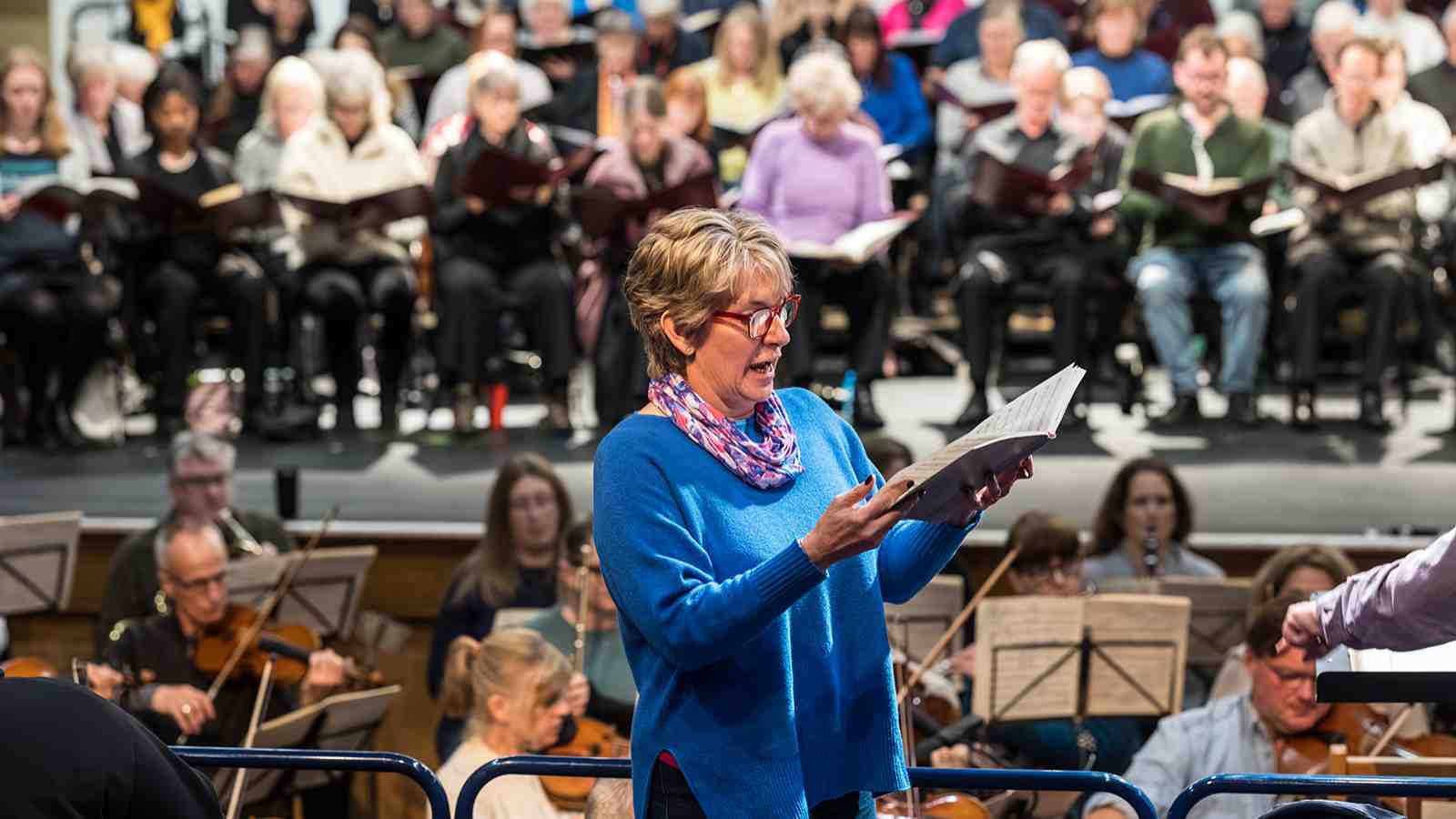
.jpg)
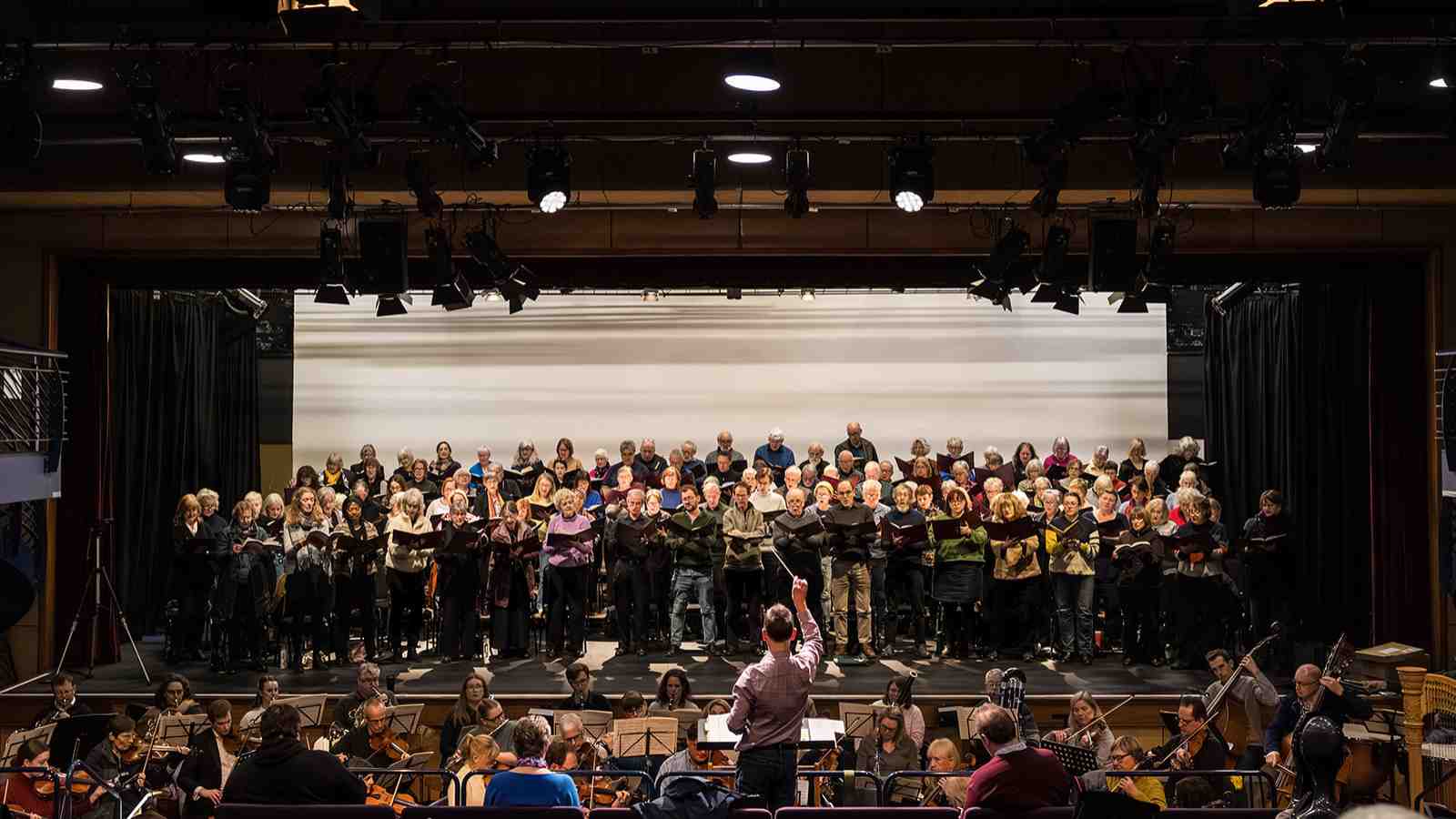
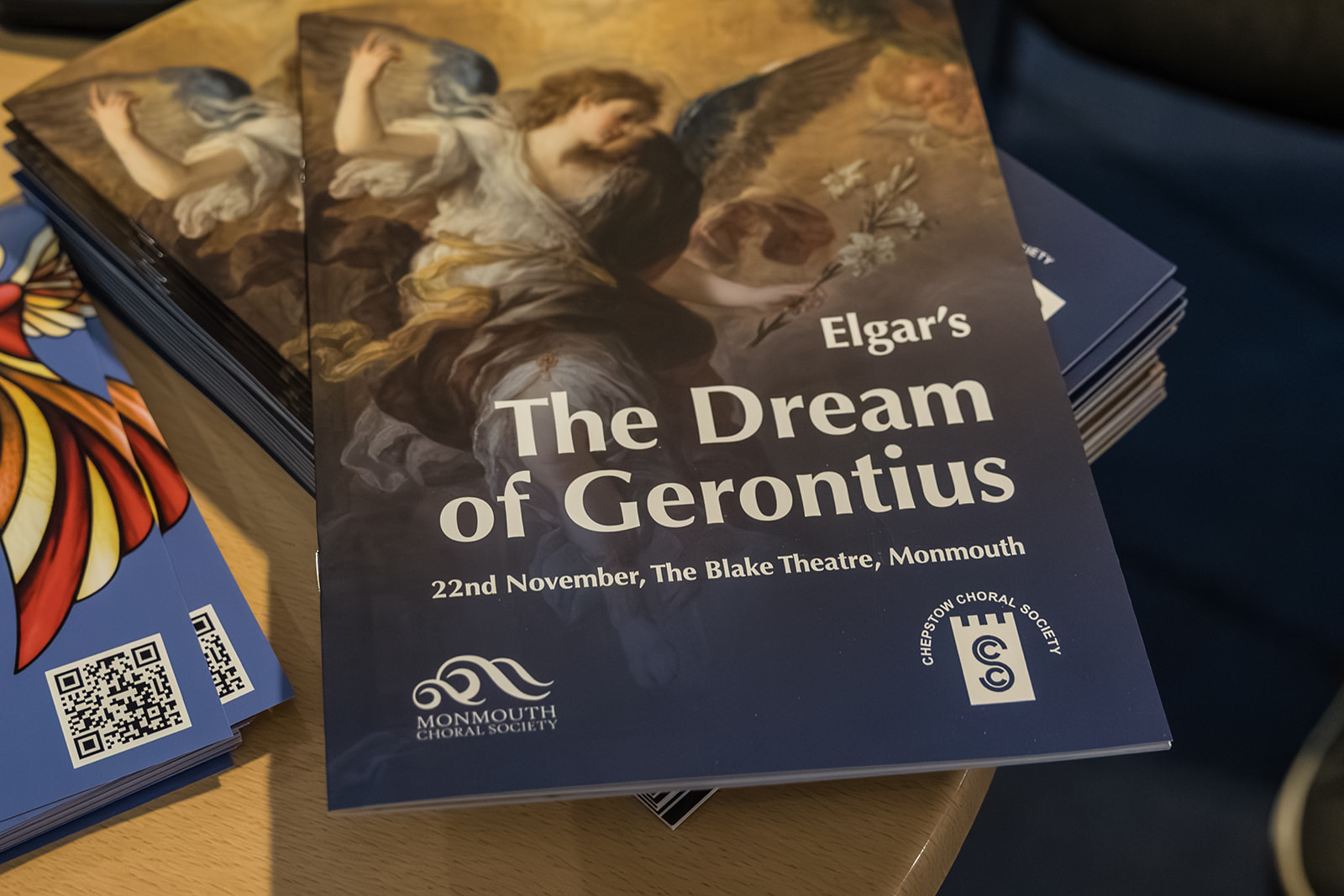
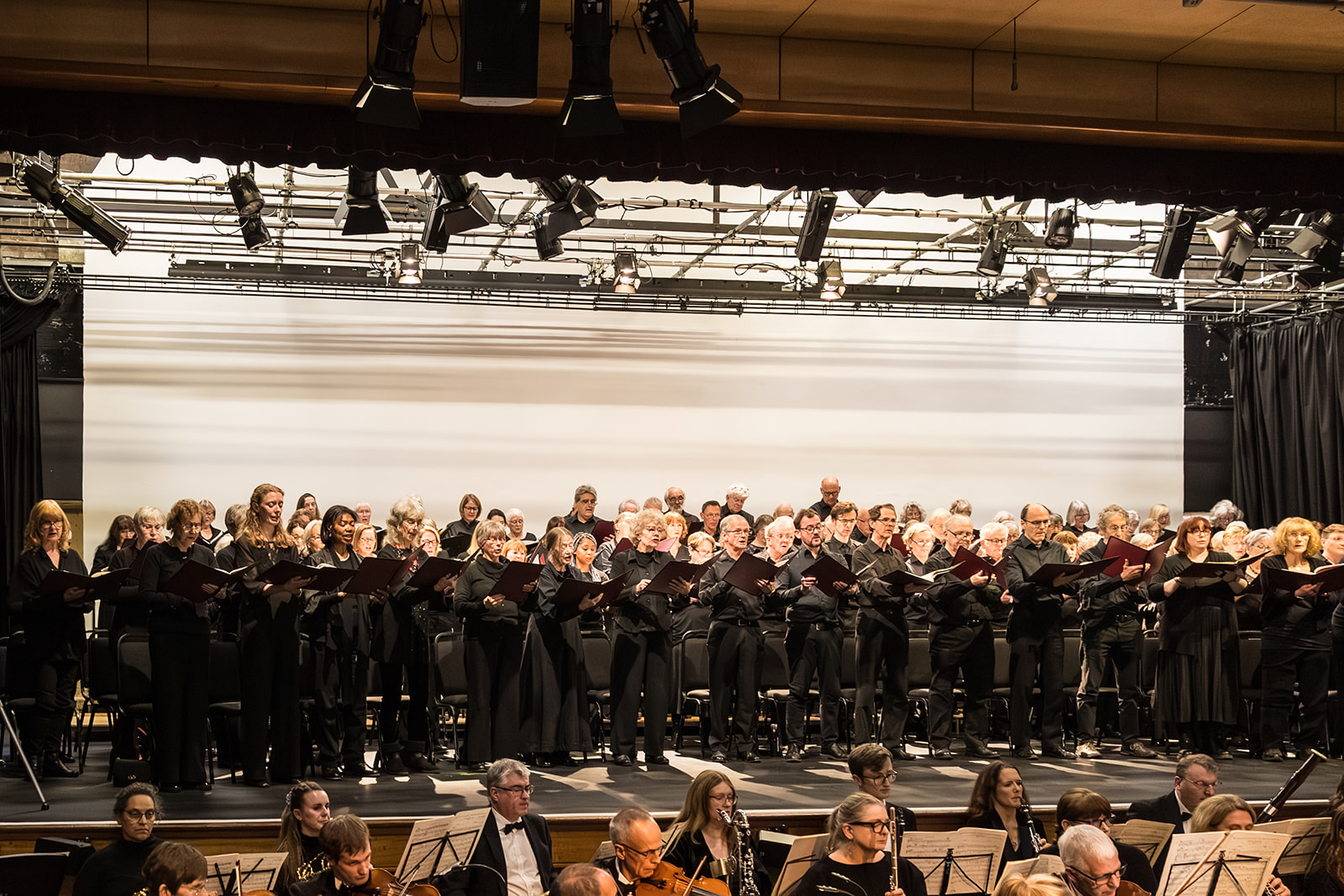
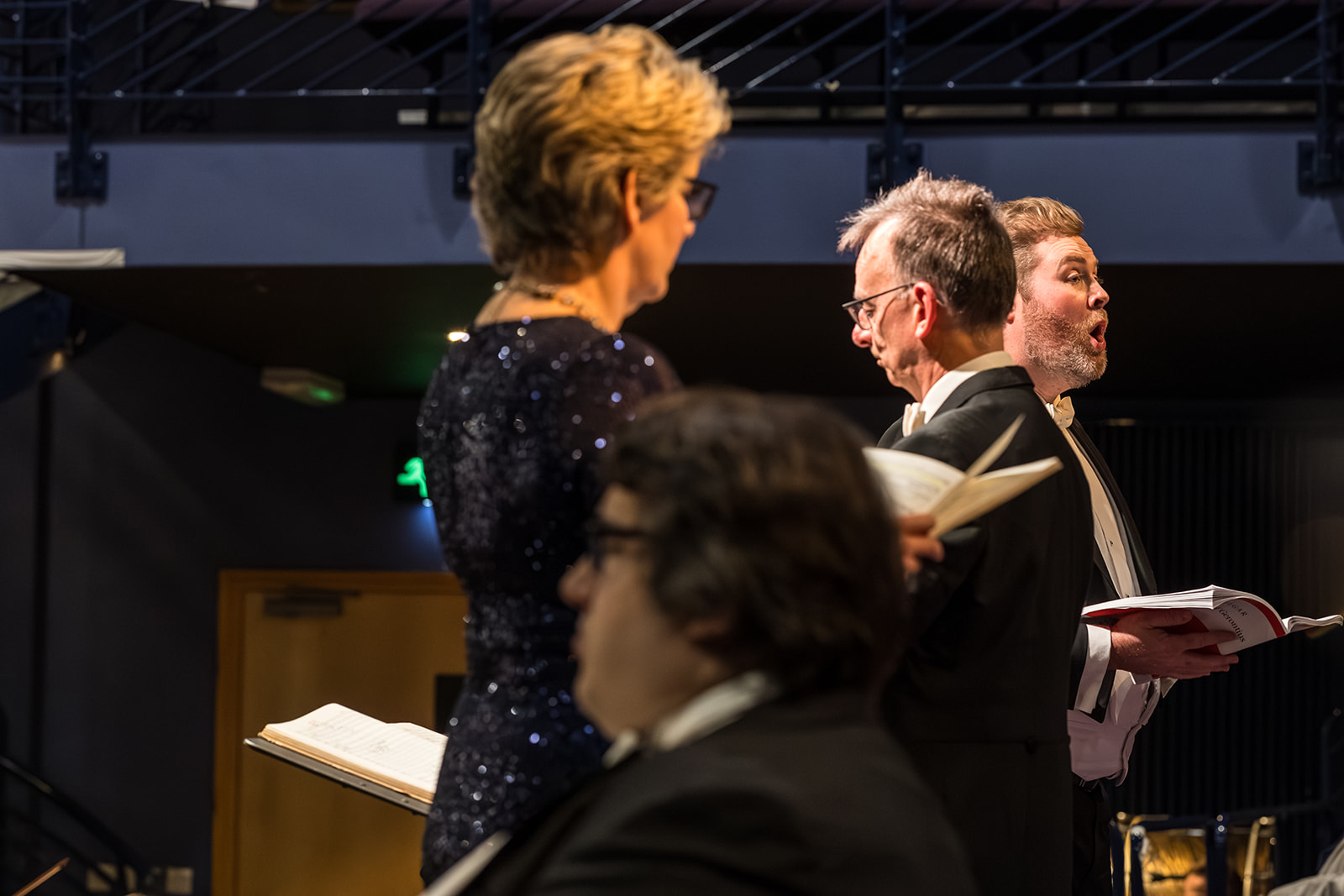 This dramatic work to which many choral singers aspire depicts spirituality, steering away from biblical text in favour of a poem by Cardinal John Henry Newman. In addition, Elgar uses the orchestra’s role following Wagnerian style, to portray the narrative with equal status to the singers.
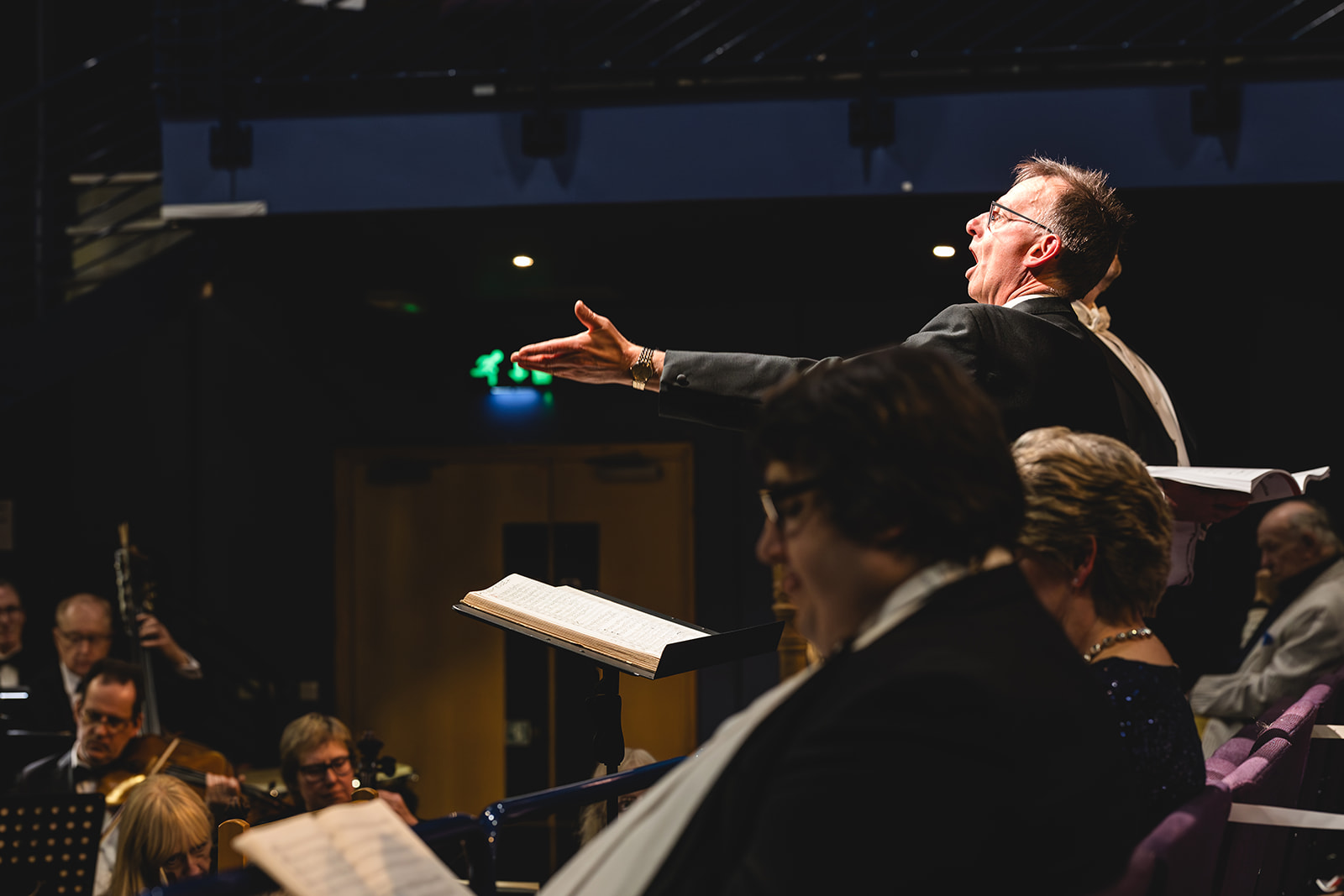 The performance was conducted by Steven Kings, Monmouth Choral Society’s Musical Director. Elgar scored for 2 choruses so while Monmouth was rehearsing on home ground, Chepstow Choral Society could rehearse on theirs with Musical Director Graham Bull. It was clear that both choirs had practised with sincere attentiveness to ensure their mutual compatibility when together.